
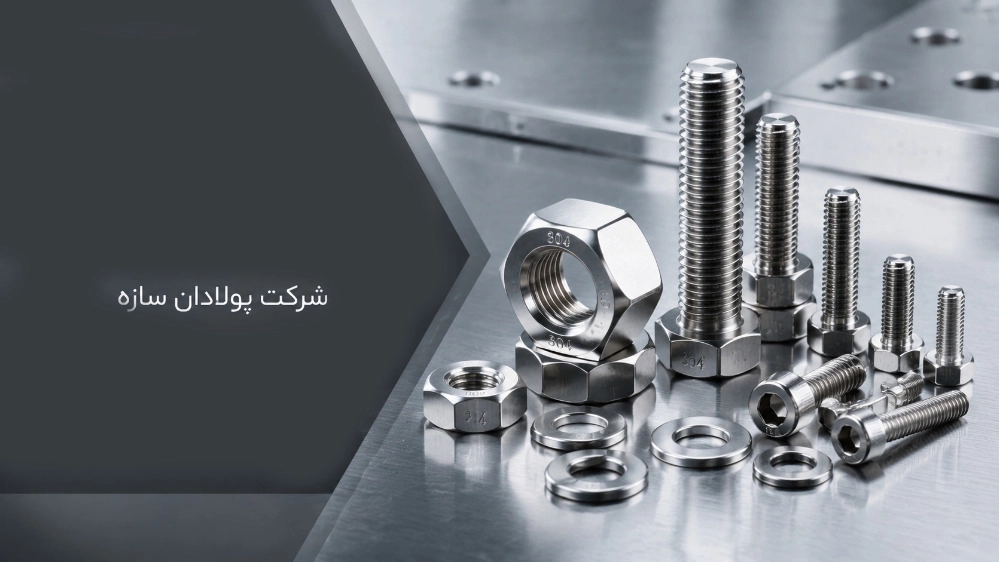
The importance and position of steel nut in modern industries
Comparison of steel nut with other industrial materials
Common grades in the production of industrial steel nuts
- Steel 304 (A2): The most widely used grade of steel that has good resistance to the atmosphere, fresh water and weak chemical environments.
- Steel 316 (A4): Contains the element molybdenum, which provides excellent resistance to chlorides, sea water and strongly acidic environments.
- Refractory steels (such as 310 and 321): For projects dealing with very high temperatures, such as industrial furnaces and aviation industries.
Specialized production process of industrial steel nut
Step-by-step construction steps and working thread
Quality control and laboratory tests
Advantages of bulk orders for industrial steel nut projects
Reducing project costs
Guarantee of timely supply and uniformity of quality
International standards in the manufacture of industrial steel nuts
- DIN standard (Germany): such as DIN 934 for standard hexagon nuts and DIN 985 for felt cup nuts.
- ASME/ANSI standard (USA): which defines the dimensional standards of inch threads (UNC and UNF) and is widely used in the oil and gas industry.
- Standard ISO: Integrated global standards for metric bolts and nuts.